
Why clean industrial electrical cabinets?
A dirty cabinet doesn’t fail overnight. It runs a little hotter every year, its contacts deteriorate, its faults become intermittent, until the stoppage that wasn’t in the schedule. Here’s what dust really does to an installation, and how to remove it with no water, no chemicals and no dismantling.
- Dust is a thermal insulator: it raises the internal temperature and shortens component life.
- Conductive deposits on terminal blocks and busbars encourage insulation faults and leakage currents.
- An unplanned production stop almost always costs more than the maintenance that would have prevented it.
- Dry ice cleaning removes these deposits dry, with no water, no solvent and no complex dismantling.
What dust really does inside an electrical cabinet
An electrical cabinet breathes. Fans, grilles, louvres: air circulates to remove the heat produced by circuit breakers, drives and control transformers. That air carries everything the workshop contains: mineral dust, fibres, flour, sugar, airborne grease, salt spray. Year after year, these particles settle on the very surfaces that should stay clean.
1. Overheating
This is the most immediate effect. A layer of dust on a heat sink acts like a blanket: heat can no longer escape. Grilles clog, airflow drops, the internal temperature rises. The commonly accepted engineering rule on insulation ageing, where about ten extra degrees is enough to halve service life, gives the order of magnitude of the problem. A cabinet running permanently ten degrees above its rated temperature doesn’t fail straight away. It simply ages twice as fast, silently.
2. Insulation faults
Not all dust is inert. Metal particles from a machining workshop, carbon deposits, salt or sugar residue from the food industry become conductive as soon as relative humidity rises. On a terminal block, between two bars, on the surface of an insulating support, this film creates leakage paths where the designer intended air. The result ranges from unexplained RCD tripping to an outright flashover.
3. Contacts and moving parts
Contactors, relays, isolators, control buttons: every operation of a dirty contact increases contact resistance, and so local heating, and so oxidation. The circle closes in on itself. The resulting failures are the hardest to diagnose, because they are intermittent.
4. Diagnosis becomes impossible
A point raised less often: in a dirty cabinet, you can’t see anything any more. Cable markers are unreadable, burn marks blend into the grime, an infrared thermography gives readings distorted by the insulating layer. The maintenance technician wastes time before even starting.
The real calculation: planned maintenance versus an unplanned stop
The question at the budget meeting is never whether the cabinets should be cleaned. It’s what it does for us. The answer comes down to a comparison of durations.
| Planned cleaning | Unplanned stop | |
|---|---|---|
| Timing | Chosen, in a maintenance window | Imposed, often mid-production |
| Typical duration | A few hours | Time for the diagnosis, then for the part |
| Parts | None | Component to replace, sometimes urgently |
| Production impact | None to marginal | Line stopped, batches lost |
| Effect on insurance | Maintenance traceability | Questions about the upkeep of the installation |
Add to this a point that plant managers know well: fire of electrical origin remains one of the leading causes of industrial losses, and the build-up of combustible dust in a switchboard is part of it. A clean maintenance file, with before/after photos and a job report, carries weight during an insurer’s visit or an audit.
What the result looks like
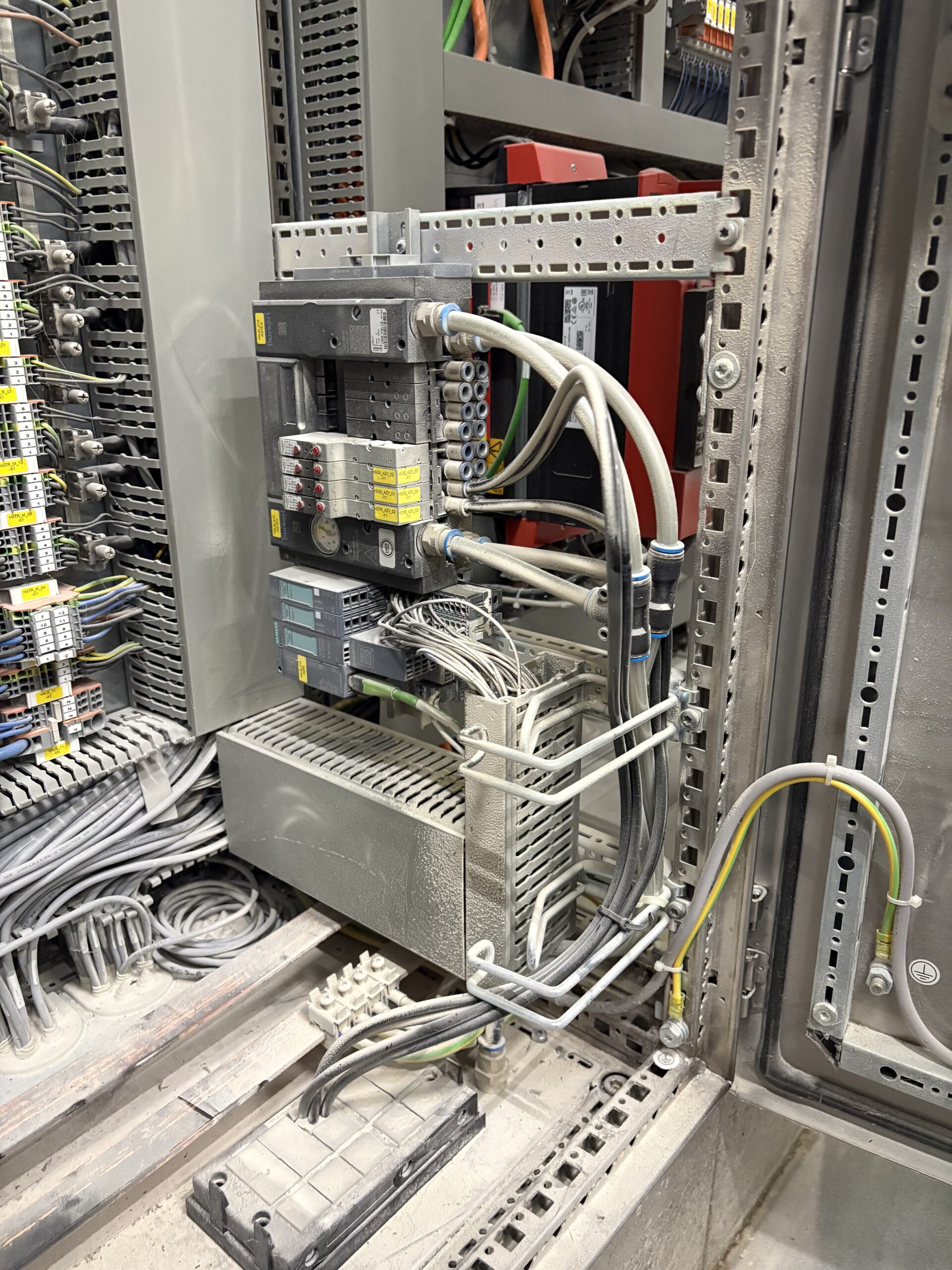
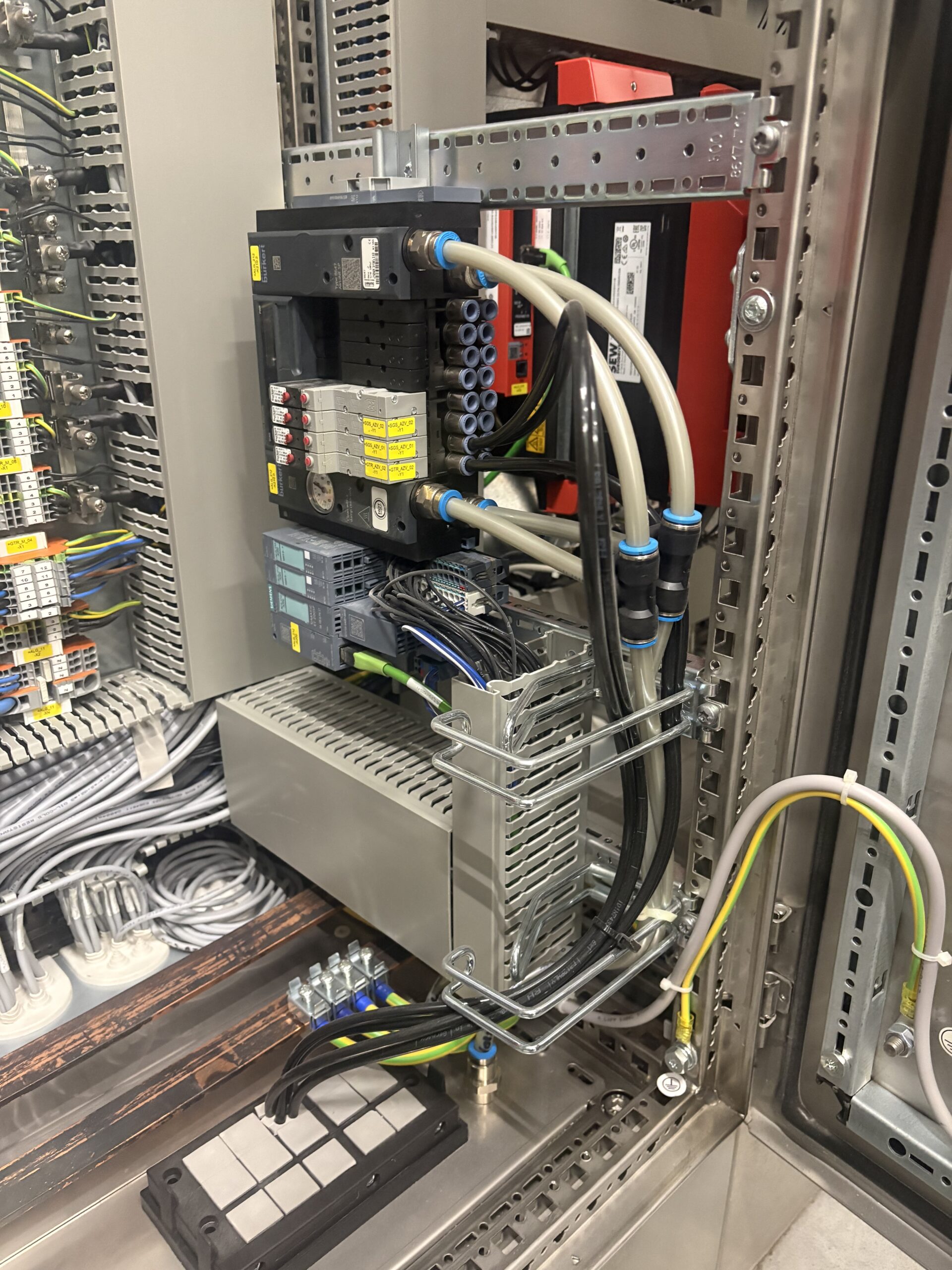
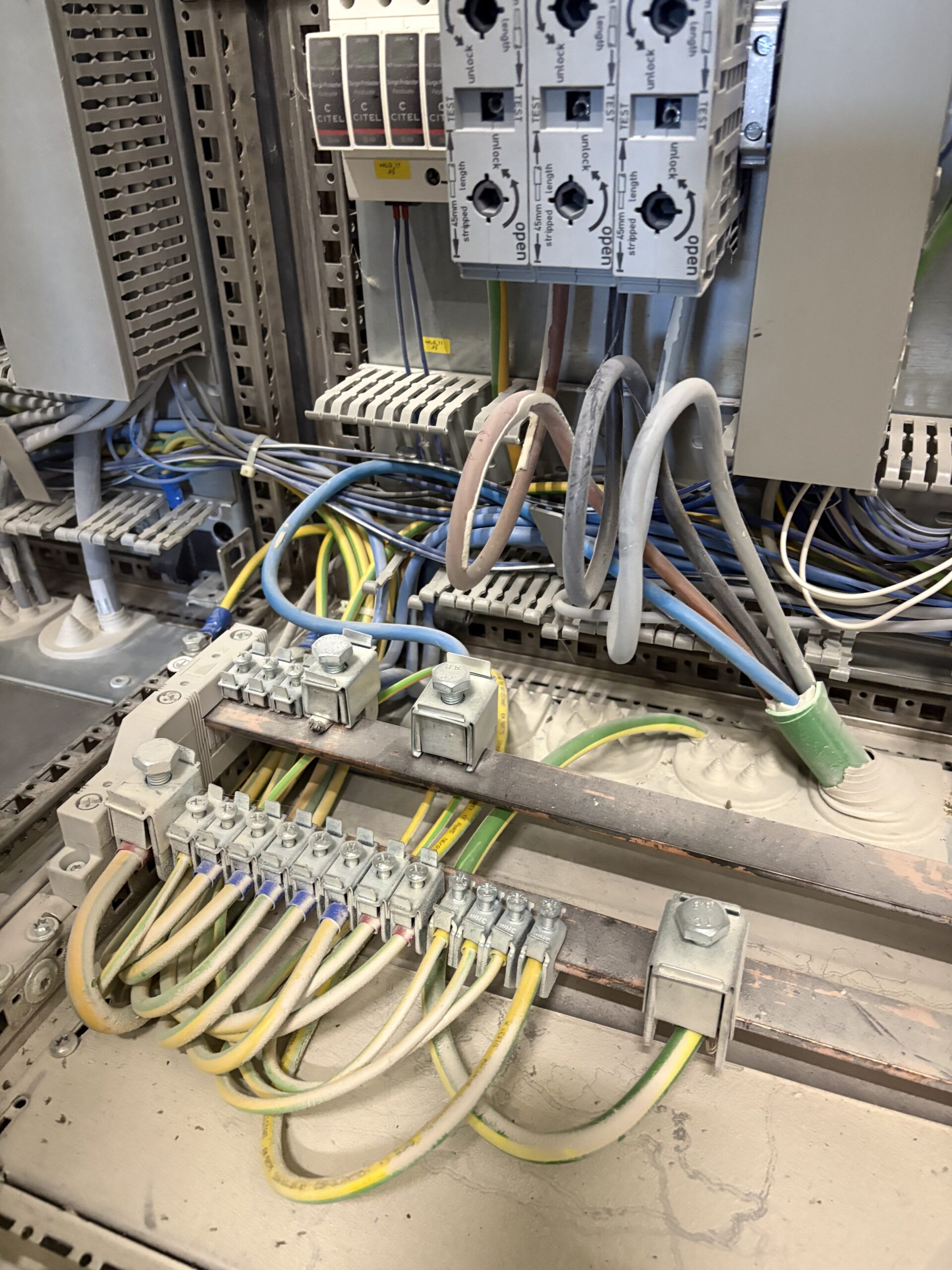
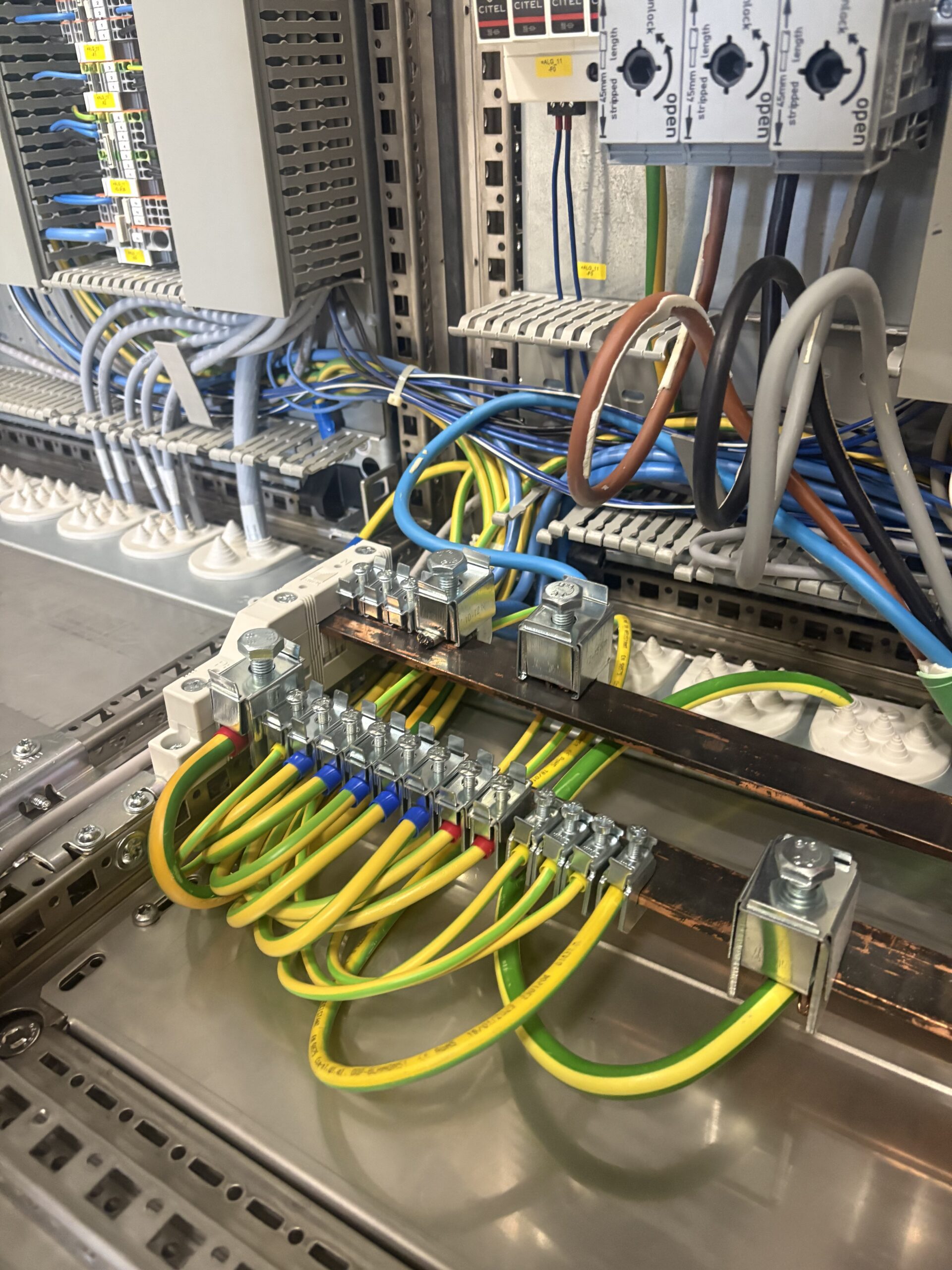
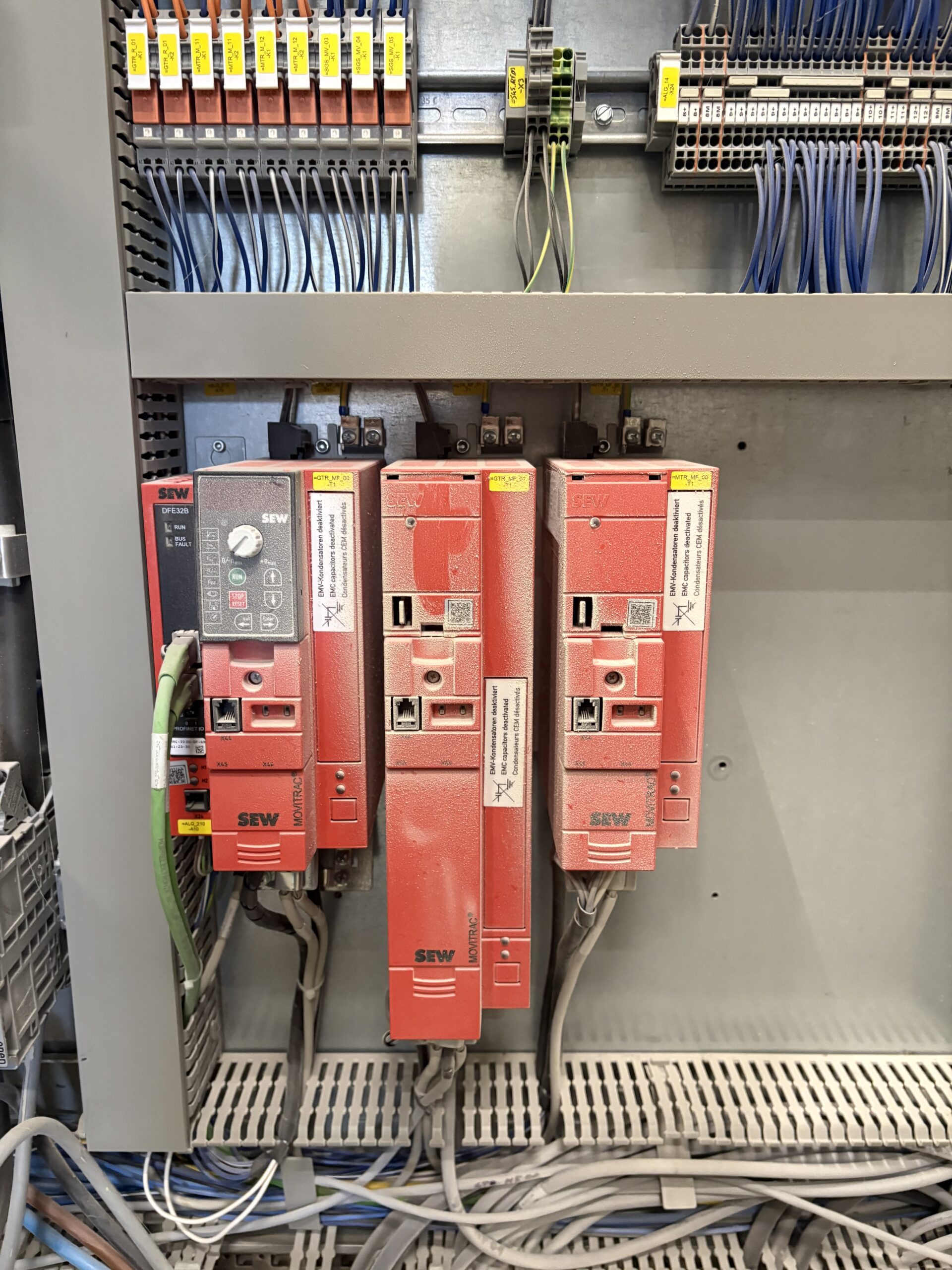
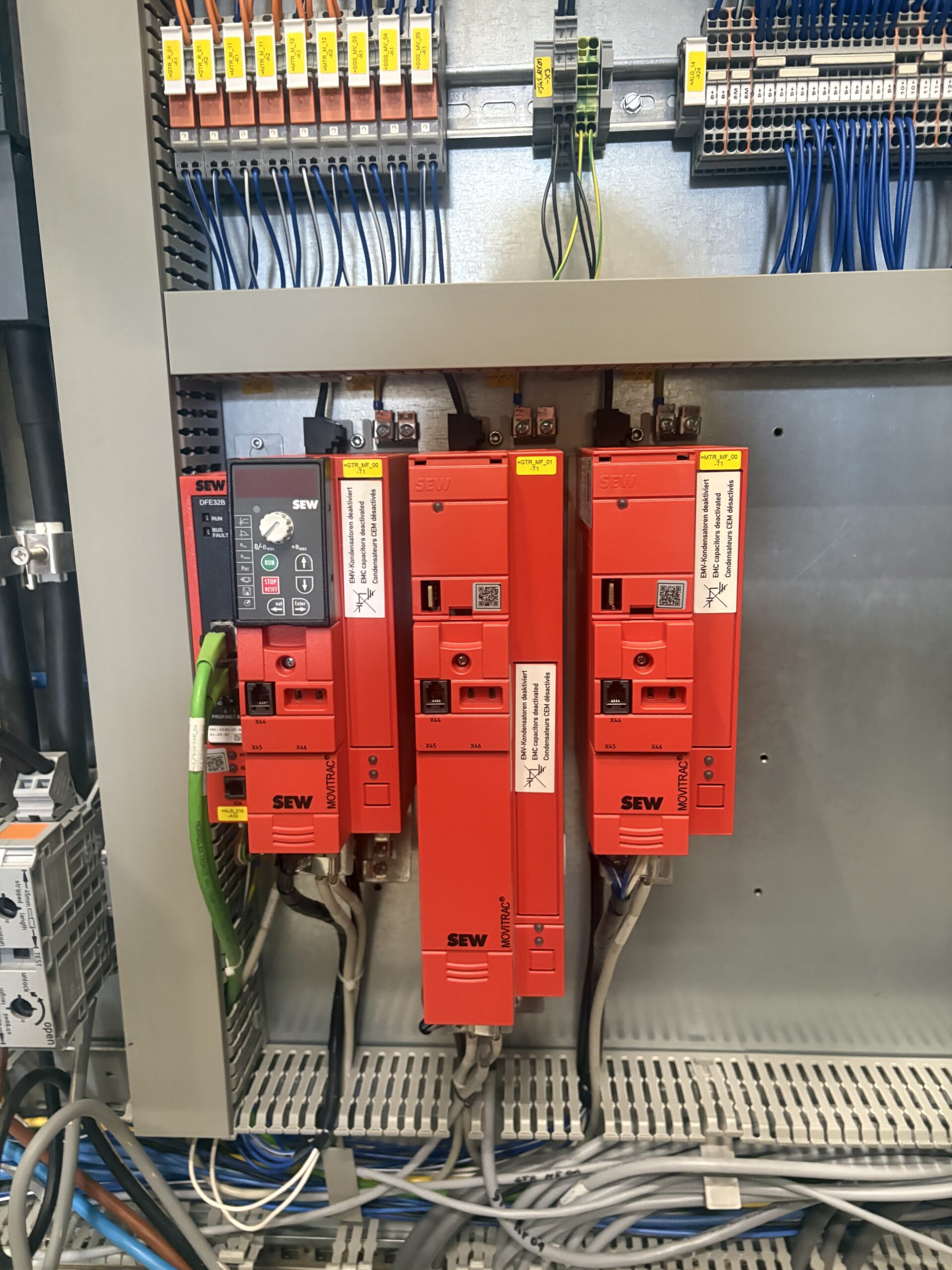
Three details from the same job, carried out on the control and power cabinets of a brewery. Two hours of work, no dismantling, no water.
Why dry ice cleaning rather than an air gun
A compressed air gun moves dust, it doesn’t remove it. It stirs it back up and drops it two metres further on, often somewhere less accessible. A cloth and solvent need direct access to every surface, which means dismantling, and they bring moisture into a space that doesn’t want it.
Dry ice cleaning blasts dry ice snow, CO₂ in solid form, at high speed onto the surface to be treated. On contact, three effects combine: the thermal shock weakens the bond between the dirt and its substrate, the impact mechanically lifts the deposit, and the instant sublimation of the CO₂ drives it off the surface. The pellet turns into gas: there’s no cleaning media left to remove, only the dirt, which is vacuumed up.
How often should you intervene
There is no universal interval: the right frequency is the one your environment dictates. Three practical benchmarks.
The best indicator remains infrared thermography. If your reports show hot spots that move from one campaign to the next, or unexplained temperature differences between phases, fouling is almost always part of the explanation.
Frequently asked questions
Does the installation need to be isolated?
The decision lies with the site’s electrical manager and depends on the type of cabinet and the area treated. We take it together during the preliminary visit, with the prevention plan.
Does the process damage labels and cable markers?
The jet parameters, pressure, pellet size and distance, are set surface by surface. Markers and screen printing are preserved, which is precisely the point of a non-abrasive process.
Is there a risk of condensation?
The cooling is very localised and very brief. The risk is controlled through the pass speed and ventilation of the area, points covered in the method statement provided before the job.
What do you receive after the job?
A job report with before/after photos of each area treated, the method used and the actual duration, ready to add to your maintenance file.
Have your cabinets assessed
Send us a few photos of your cabinets or your latest thermography reports. We’ll tell you whether a job is justified, and what it means in time and budget.