
A dirty facade ages a building much faster than time itself. Moss, atmospheric dirt, black marks on the stone: the most common reflex is to use pressure washing or conventional sandblasting. The problem is that these methods solve the visible problem by creating an invisible one, which is often more expensive in the long run.
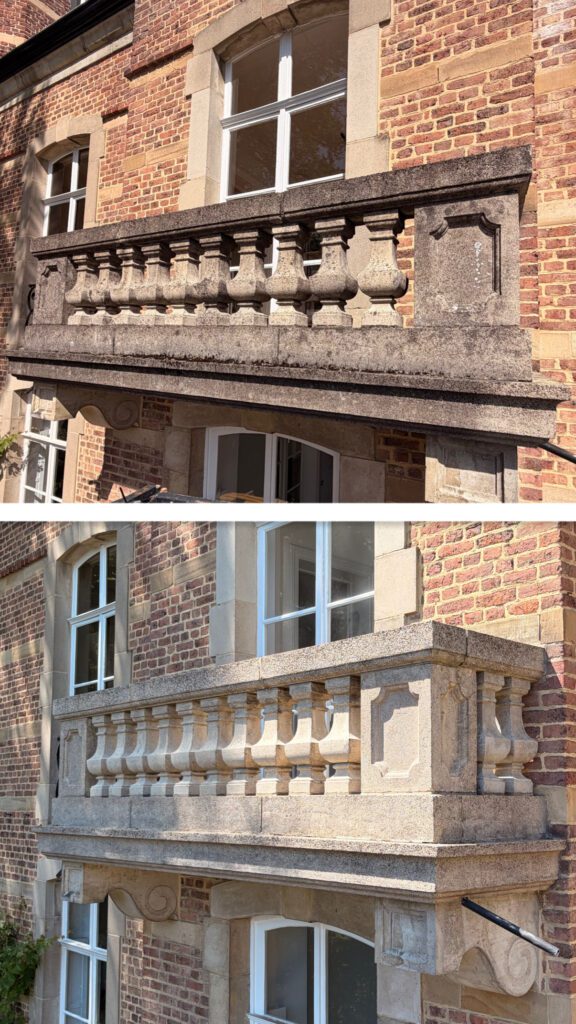
What pressure washing and sandblasting really do to your facade
High-pressure water gets into the micro-cracks of stone or render, and this residual moisture takes weeks to fully escape. In the meantime, it actually encourages the moss and lichen you wanted to remove, while increasing the risk of destructive freeze-thaw damage in winter. Sandblasting, for its part, is purely abrasive: it strips a thin layer of material with each pass, which wears the stone prematurely, erases carved details and permanently changes the original look of a historic facade.
Dry ice cleaning: non-abrasive and water-free
Dry ice removes dirt, moss and deposits through thermal shock rather than mechanical abrasion or water penetration. It sublimates instantly into gas on contact with the surface, leaving no residue and no moisture to dry. Stone, brick, concrete or metal cladding keep their original surface condition, including the most delicate reliefs, mouldings and carved elements.
Which types of facade can be treated
- Natural stone and limestone, including on listed facades
- Exposed brick and mortar joints
- Concrete and modern facade renders
- Metal cladding and zinc work
What it concretely changes for your facade renovation
With no residual moisture to remove, there is no need to wait several days before applying a water-repellent treatment or a finishing paint: the work progresses faster. The absence of abrasion preserves the heritage and aesthetic value of the building, often a decisive point for listed properties or buildings for sale. Finally, a non-aggressive cleaning reduces how often you will need to intervene again: stone that has not been eaten away by sandblasting resists new dirt better.
When to consider it first
Dry ice cleaning is particularly suited to listed facades or dressed stone, where abrasion is simply not an option, and before a facade renovation where drying times must be kept to a minimum. It is also relevant on permanently occupied buildings (shops, offices, apartment buildings), since it does not spray water that could get in through the windows or disrupt ongoing activity.
Icetec works on facades in Belgium and Luxembourg, with a free quote within 6 working hours. Find out about our approach to dry ice cleaning of heritage buildings and monuments, or contact us directly to schedule a job on your building.
Equipment to clean?
Describe your installation or send us a few photos: we’ll reply with an initial assessment and a free quote within 6 working hours.