
On a chocolate production line, cleaning with water out of habit can be very costly. While water is the obvious solution in almost the entire food industry, here it becomes a risk of contamination and quality defects, for a simple reason: chocolate and water never mix well.
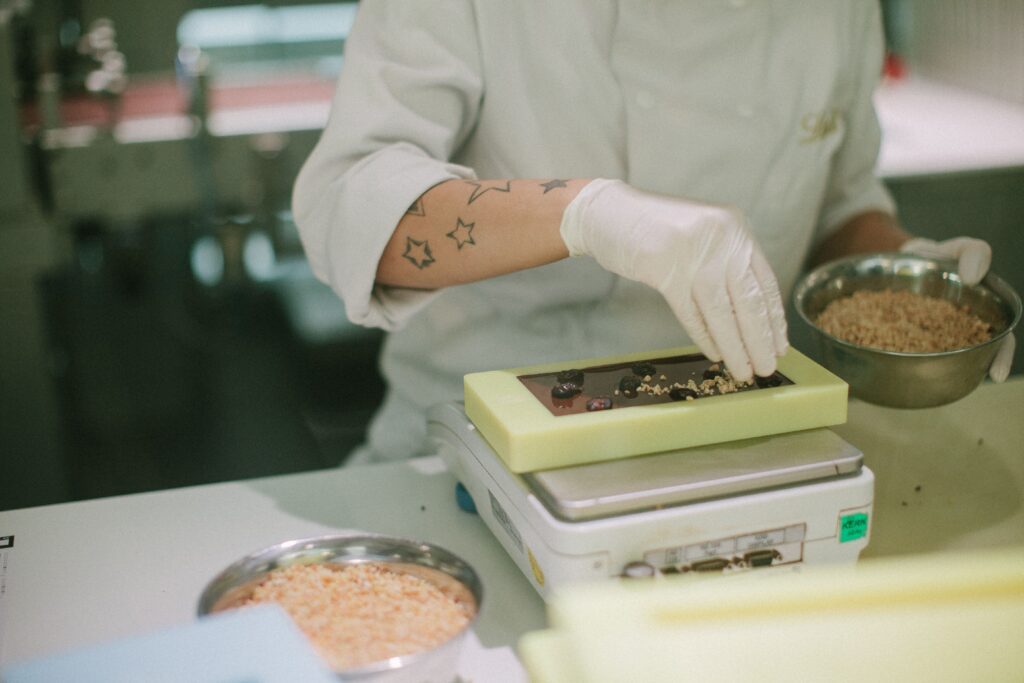
Why water is incompatible with a chocolate production line
Chocolate contains sugar, and sugar is hygroscopic: at the slightest contact with moisture, it partly dissolves and then recrystallises on the surface as it dries. This is “sugar bloom”, the whitish film that makes a product unsellable even though it remains perfectly edible. Residual moisture also encourages mould and bacteria to grow in the warm, sugary areas of conches, temperers and enrobing belts: a direct HACCP risk on a product with very low water activity, which is normally unfavourable to microorganisms as long as it stays dry.
Scraping, steam, degreasers: the limits of conventional cleaning
Manual scraping requires partial dismantling of the equipment and never reaches the corners of conches, chocolate moulds or tempering screws. Steam, even briefly, introduces moisture exactly where it should not be. As for chemical degreasers, they leave residues that are incompatible with direct food contact and need rinsing (and therefore water) to be fully removed, which cancels out their benefit.
Dry ice cleaning: dry, water-free, with no risk of contamination
Dry ice sublimates instantly into gas on contact with the surface: no water, no residual moisture, no risk of sugar bloom or bacterial growth. Food-grade CO2 is recognised as an inert additive (E290) and leaves no residue to rinse off. The blasting removes hardened chocolate, cocoa butter and sugary deposits without fully dismantling conches, temperers, moulds or enrobing belts: a real time saving between two batches or two colours of chocolate.
What it concretely changes for your production
With no drying time to wait for, changing recipe or colour between two batches becomes much faster: a real gain on lines with a high turnover of products. The complete absence of water also simplifies HACCP compliance and reduces the risk of non-conformities during quality audits. Finally, stainless steel equipment and polycarbonate moulds suffer neither corrosion nor scratches, which preserves their service life and the glossy finish of the demoulded chocolate.
When to consider it first
Dry ice cleaning is particularly suited to changes of recipe, colour or allergen (switching from milk to dark chocolate, managing traces of nuts), before an HACCP or IFS audit, and for regular preventive maintenance of conches, temperers and moulds that cannot easily be dismantled. It suits small artisan chocolate makers as well as high-speed industrial lines.
Icetec works with chocolate makers and food production sites in Belgium and Luxembourg, with a free quote within 6 working hours. Find out about our approach to dry ice cleaning in the food industry, or contact us directly to schedule a job.
Equipment to clean?
Describe your installation or send us a few photos: we’ll reply with an initial assessment and a free quote within 6 working hours.